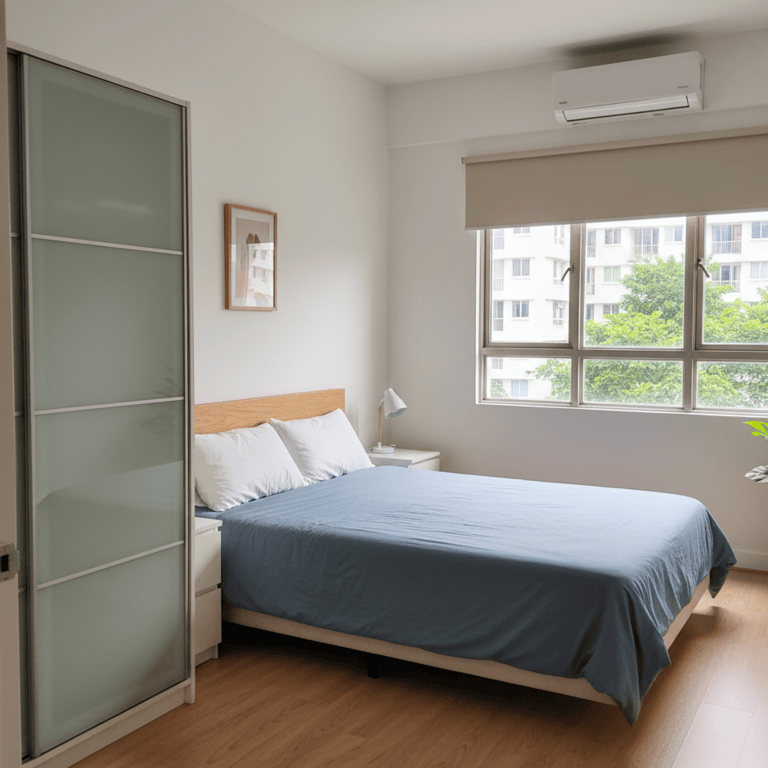
Go furnished for convenience and lower upfront setup, but inspect furniture condition and note wear expectations. Choose unfurnished for flexibility and hygiene control, factoring in delivery time, storage needs, and the effort to move items at lease end. It really depends on whether you have furniture and want to customize the space or prefer a move-in-ready setup.
Measure wardrobe depth, check for full-length hanging, and look for shelves that suit daily items. Visualize bed placement, door swing, and airflow. Make sure a desk or cot fits without blocking pathways or covering sockets and switches.
For two roommates, equal-sized bedrooms (and ideally two bathrooms) are preferable. For a small family, a larger master and a smaller second bedroom (for a child or study) works fine. So it depends: roommates usually want a balanced layout, while families can manage with one bigger and one smaller room.
HDB flats open onto a common corridor. If your unit is along a corridor with neighbors walking by, you might need to keep your gates or curtains closed at times for privacy. Corner or end units offer a bit more seclusion since fewer people pass your door. When viewing a flat, notice the corridor layout – if the windows or door face a busy walkway, plan on using curtains/blinds for privacy. It’s a different feel from a private condo, but most residents get used to it.
Use the second bedroom as a study (or an office/guest room combo). If both bedrooms are in use, find a nook in the living or dining area for a desk. For instance, a small desk by a window can serve as a cozy work spot. Pick a corner that doesn't disrupt daily living.
Not all HDB blocks have lifts on every floor. In some older blocks, the lift may stop only on certain levels, meaning you’d need to take the stairs for a floor or two. Check if the flat’s floor has direct lift access for convenience, especially if you have lots to carry or anyone with mobility issues. (Newer blocks usually have lifts on every floor.)
With more people and activities, noise management becomes important for family harmony and neighbor relations. Check sound insulation between rooms, whether bedrooms are clustered together, and if living areas are separated from sleeping areas. Consider carpet or rugs for sound dampening.
Typically, there's a built-in wardrobe in the bedroom and cabinets in the kitchen. Some 1-bedroom flats include a small storeroom or utility closet. Use vertical space by adding shelves in empty spots. And choose furniture with storage, like a bed with drawers or an ottoman that opens.