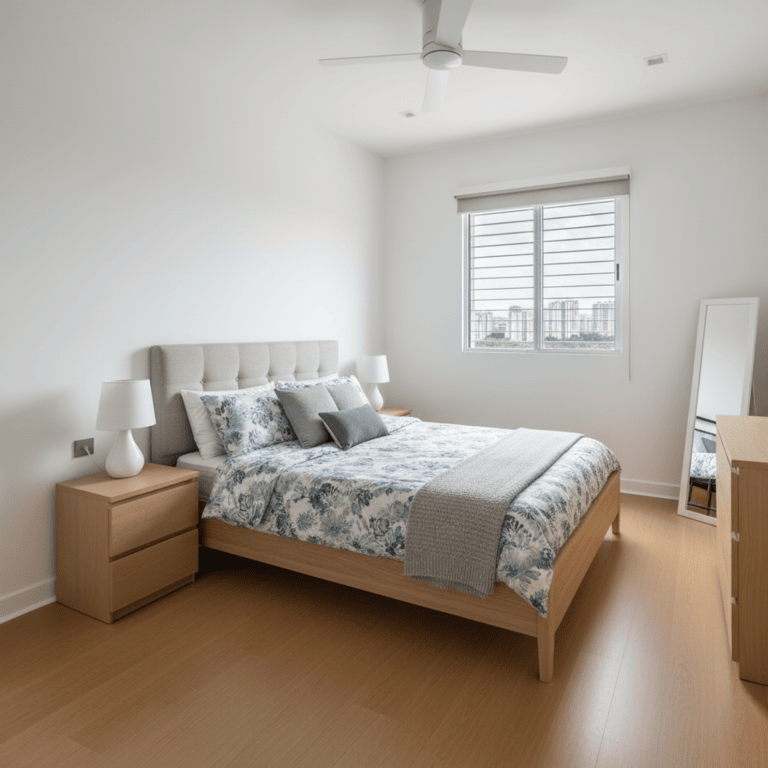
Families need significant storage for clothing, toys, school supplies, and household items. Look for built-in wardrobes in each bedroom, linen closets, kitchen storage, and utility areas. Check if there's a storeroom, under-stair storage, or if you can add storage furniture without overcrowding the space.
1-bedroom units offer better work-life separation than studios with a dedicated bedroom for sleep and living area for work. You can have video calls without showing your bed, and maintain professional backgrounds. However, the limited space means you'll need efficient furniture and good organization. Consider noise levels from neighbors and ensure good internet connectivity for reliable remote work.
Landed houses offer more space but lack condo facilities. You’ll likely get a bigger room and maybe a garden or yard to enjoy. However, you won’t have amenities like a pool or gym on-site. It’s a balance: more personal space and privacy in exchange for not having shared facilities.
HDB has ethnic integration policies that may affect room rentals. Some HDB flat owners can only rent to tenants of certain ethnic groups to maintain racial balance in the block. This is a government policy, not discrimination. Ask landlords upfront about any restrictions and understand it's about maintaining community diversity, not personal preference.
Condos have by-laws residents must follow. Common rules cover noise (quiet hours), visitor sign-ins, proper garbage disposal, and use of shared facilities. Ask your landlord about any specific condo rules. Abiding by them will keep you out of trouble with management and neighbors.
Landlords typically have property insurance, but this doesn't cover your personal belongings. Consider renter's insurance for your possessions and personal liability. Some policies cover temporary accommodation if the unit becomes uninhabitable. Check if your landlord requires you to have insurance and understand what's covered under their policy versus what you need to protect yourself.
With multiple rooms and potentially multiple air-con units, electricity costs can be substantial. Consider zoned cooling - only cool rooms that are in use. LED lighting throughout the unit reduces electricity consumption. If sharing with others, discuss fair splitting of utilities based on actual usage patterns rather than equal division.
Condos often have specific rules about tenant behavior, pet policies, noise restrictions, and guest limitations. Some prohibit short-term rentals, have strict move-in procedures, or limit the number of occupants. Understand parking allocations, facility usage rights, and any restrictions on modifications. Violating condo rules can affect your tenancy even if your landlord approves certain activities.