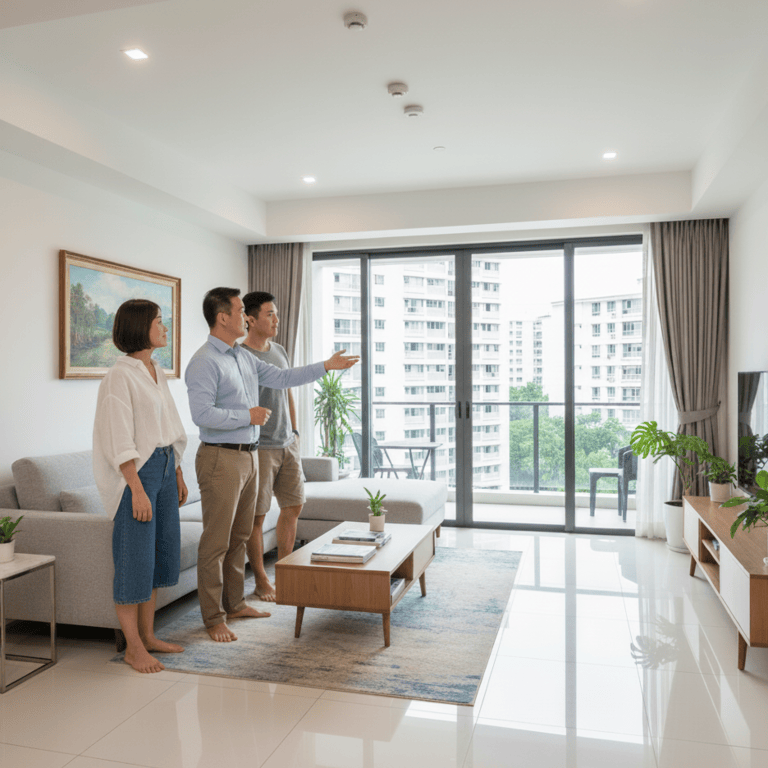
With more people and activities, noise management becomes important for family harmony and neighbor relations. Check sound insulation between rooms, whether bedrooms are clustered together, and if living areas are separated from sleeping areas. Consider carpet or rugs for sound dampening.
Landed houses often have helper's quarters or space for live-in domestic help. Clarify with your landlord whether you can employ helpers, if there are designated helper areas, and what additional costs or responsibilities this entails. Understand helper accommodation standards, work permit requirements, and whether helper facilities like separate bathrooms or kitchens are included in your rental.
If you rent a common room, you’ll likely share a bathroom with one or more housemates. Agree on morning and evening peak times, cleaning duties, and storage space for toiletries. A shower caddy and labeled shelves reduce friction. Expect to compromise a little on timing and cleanliness habits, but overall, as long as everyone is considerate (cleaning hair from the drain, not hogging the bathroom for an hour), sharing a bathroom is manageable.
Use multi-functional furniture and vertical space. For example, a bed with drawers underneath or shelves up high on the walls adds storage without taking floor space. Declutter regularly and use hidden storage (like ottomans or coffee tables with compartments) to keep your studio organized.
Master rooms command premium rent due to size and ensuite access. Research comparable listings to understand market rates. Consider negotiating longer lease terms for rent stability, or ask about inclusive utility caps to manage higher consumption costs. Some landlords offer furnished master rooms - evaluate if the premium is worth the convenience.
Yes, but requires planning. The separate bedroom allows one person to sleep while the other works or watches TV in the living area. Consider blackout curtains and sound management. Some couples prefer open-plan studios for togetherness, while others need the bedroom separation for different sleep schedules or work-from-home arrangements.
Studio entertaining requires creativity due to limited space. Use folding furniture and multi-purpose items to accommodate guests. Consider the noise impact on neighbors in compact buildings. Overnight guests will need to sleep in your main living space, which affects your privacy. Plan gatherings during times when space can be reconfigured for socializing.
Master rooms offer more privacy for hosting but require coordination with housemates about guest policies. Clarify overnight guest limits, shared area usage when you have visitors, and whether guests can use common facilities. Be considerate about noise levels and bathroom queue times when hosting. Your ensuite provides privacy but ensure guests understand house rules and respect other tenants' space.