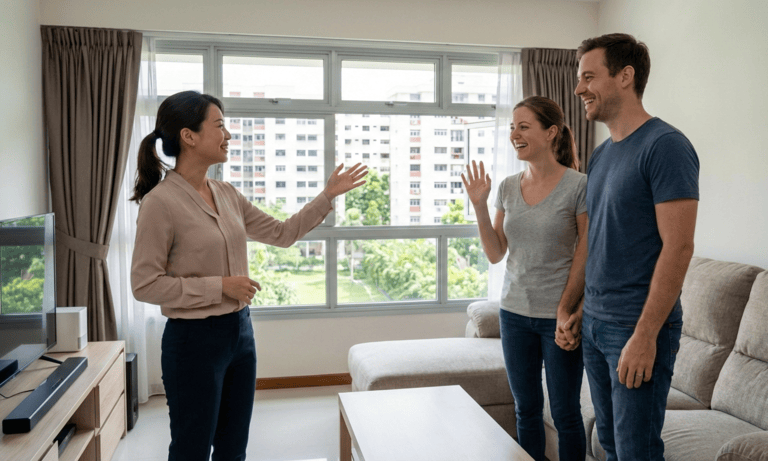
Look for units where bedrooms are well-separated, preferably not all clustered together. Check sound insulation between rooms, whether there are multiple bathroom facilities, and if common areas allow for both social interaction and private space. Consider the unit's layout for natural privacy zones.
HDB living means thinner walls, so noise travels easily between units and rooms. Be considerate with music, phone calls, and movement during quiet hours. Cooking smells can also spread quickly - use exhaust fans and keep doors closed when cooking strong-smelling food. The close-knit community feel means neighbors often know each other, which can be comforting but also means less anonymity.
Master rooms cost more because they’re typically the largest room and come with an attached bathroom. You’re paying a premium for the extra space, privacy, and convenience. They may also get better wardrobes, windows, and layout. Premiums vary by location, building type, and whether utilities are included.
Generally, yes. Landed homes are often in quieter residential areas, so public transport might be a longer walk away. If you don’t drive, check how close the nearest bus stop or MRT is. You’re gaining a quiet environment but giving up some convenience of easy transport access.
Not typically. You’ll rely on public gyms, community clubs, and neighbourhood pools. Many tenants prefer HDBs for value and convenience to everyday shops and transport.
Master rooms typically consume more electricity due to larger space and ensuite bathroom usage. You'll likely run air-con longer, use more lighting, and the ensuite adds water heating costs. Discuss with housemates whether utility splitting accounts for room size differences or if everyone pays equally regardless of consumption.
Master rooms offer more privacy for hosting but require coordination with housemates about guest policies. Clarify overnight guest limits, shared area usage when you have visitors, and whether guests can use common facilities. Be considerate about noise levels and bathroom queue times when hosting. Your ensuite provides privacy but ensure guests understand house rules and respect other tenants' space.
Living alone means you bear all utility costs, so efficiency matters. Use programmable thermostats for air-conditioning, switch to LED lighting, and unplug devices when not in use. Consider your usage patterns - cook in batches, do laundry efficiently, and use appliances during off-peak hours if available. Monitor your monthly bills to identify high-consumption periods and adjust habits accordingly. Some units benefit from smart home devices to optimize energy usage.