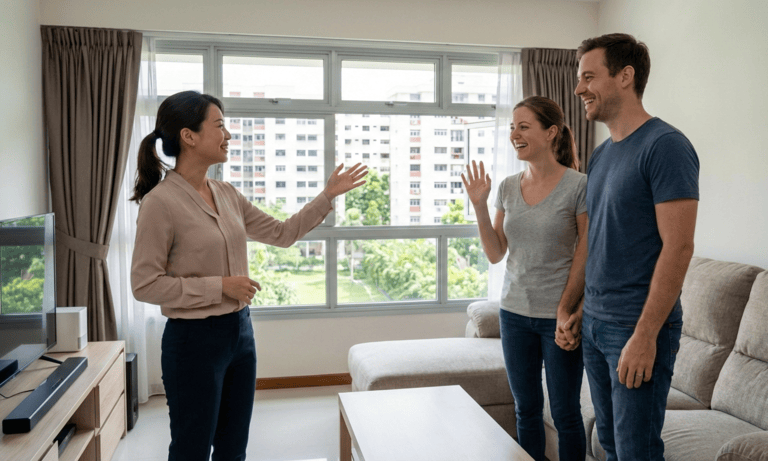
Families need significant storage for clothing, toys, school supplies, and household items. Look for built-in wardrobes in each bedroom, linen closets, kitchen storage, and utility areas. Check if there's a storeroom, under-stair storage, or if you can add storage furniture without overcrowding the space.
2-bedrooms can work for families with one or two young children, offering more space than a 1-bedroom while remaining affordable. Consider safety features, proximity to schools and parks, whether the layout allows parents to supervise children, and if there's adequate storage for family belongings and toys.
Air-con significantly impacts electricity bills in Singapore's climate. Discuss usage patterns with housemates - some prefer it only at night, others need it during work-from-home hours. Agree on temperature settings (24-26°C is efficient) and whether common areas should be cooled. Consider individual room usage tracking or splitting bills proportionally based on usage patterns.
Furnishing a 4-bedroom requires more furniture (beds, sofas, tables, etc.), so budget and plan accordingly. You can furnish gradually room by room. Cleaning is also a bigger job – more floor space, more bathrooms, more surfaces to wipe. Expect to spend extra time on chores or consider hiring help. It's wise to clean in zones (a room or area each day) so it's manageable.
Use multi-functional furniture and vertical space. For example, a bed with drawers underneath or shelves up high on the walls adds storage without taking floor space. Declutter regularly and use hidden storage (like ottomans or coffee tables with compartments) to keep your studio organized.
Many require a booked timeslot for lift padding and may collect a refundable deposit. Confirm required forms, booking windows, and whether your landlord handles them. Plan deliveries to match the approved window so movers aren’t turned away unexpectedly.
Confirm whether you’ll park on a driveway or street and how visitors should park. Test gate mechanisms and night lighting. If you own bicycles or scooters, ensure secure storage and a practical route without lifting heavy equipment up stairs.
More space means more maintenance responsibilities. Budget extra time and money for cleaning, air-con servicing for multiple units, and potential repairs across more rooms. Consider hiring help for regular cleaning or establish clear maintenance schedules if sharing. More space also means higher wear and tear on common areas.