Yes. Check that there’s an aircon in each bedroom and the living room. Make sure they all work. Also note the number of power outlets in each room. Some older flats have few sockets, so ensure there’s one where you plan to put your TV or computer. If not, you’ll need extension cords. Knowing this upfront helps you plan.
Many 3-bedroom units include a small service yard or utility area near the kitchen for laundry. It’s basically space for a washing machine and to hang clothes. Not all layouts have this, so check the floor plan. If a listing mentions a 'yard' or utility room, that usually means there’s a dedicated laundry area.
North-facing units stay cooler but may have less natural light, while west-facing units get hot afternoon sun but brighter interiors. East-facing units get morning sun, and south-facing units receive consistent light throughout the day. Consider your lifestyle, air-con usage, and preference for natural light versus heat management.
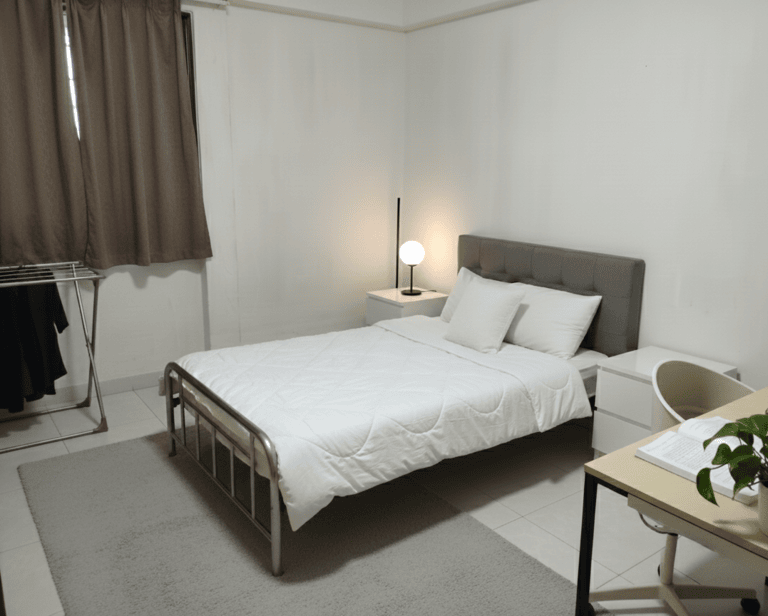
Ventilation and sunlight can make a small room feel more comfortable and livable. Natural light makes the space feel more open and pleasant, and it can even improve your mood. See if it has a window that opens to outdoors (and not just into a corridor or airwell). Good ventilation and light are key for your daily comfort in that space.
HDB living means thinner walls, so noise travels easily between units and rooms. Be considerate with music, phone calls, and movement during quiet hours. Cooking smells can also spread quickly - use exhaust fans and keep doors closed when cooking strong-smelling food. The close-knit community feel means neighbors often know each other, which can be comforting but also means less anonymity.
Common rooms near front doors or main corridors may have security considerations. Ensure your room has a good lock and consider a door chain. Keep valuables secured and curtains closed for privacy. Check if the main door has proper security features. Some tenants install small safes or use lockable storage boxes for important documents and valuables.
A lot of 1-bedroom units have small bedrooms. A queen-size bed usually fits, but a king-size might be a tight squeeze. With a king, you might have little room left for bedside tables or a dresser. Always check the room dimensions beforehand to ensure you can still move around comfortably.
Yes, usually the dining area in a 4-bedroom flat is sized for a big family. You can typically fit a 6- or 8-seater table comfortably. Some layouts have a separate dining room, others a large combined living/dining area. Either way, you should have space for everyone to eat together. It’s wise to measure if you own a huge dining set, but generally these units accommodate family dining well.