Expect practical living with access to eateries, clinics, and everyday services nearby. Community spaces encourage casual interaction. Focus on block cleanliness, lift reliability, and nearby shops. Daily errands are usually straightforward without needing long travel or planning.
Establish morning routines and peak usage times with housemates, keep personal items organized in designated areas, and maintain cleanliness standards. Consider having backup plans for busy mornings, and communicate openly about any issues rather than letting frustrations build up.
HDB rooms often have simpler finishes and fewer shared facilities but practical layouts and solid walls. You’ll trade pools or gyms for straightforward convenience. Prioritize block condition, elevator access, and nearby amenities over lifestyle facilities you won’t use.
Open kitchens feel social and spacious but spread cooking smells. Closed kitchens contain noise and grease better. Think about your cooking style, ventilation, and how often you host. The right choice depends on whether you prioritize openness or cleanup ease.
Check names of parties, address, start date, length, payment schedule, inventory, access to facilities, and who handles maintenance. Confirm guest policy, notice periods, and early termination terms in writing before paying any deposit or handing over documents.
Renovations are common in HDB estates, so occasional daytime drilling or hacking noise is normal. Work is only allowed during set hours, but it can still be disruptive if a nearby unit is being redone. Know that it’s temporary and typically accompanied by advance notice to residents.
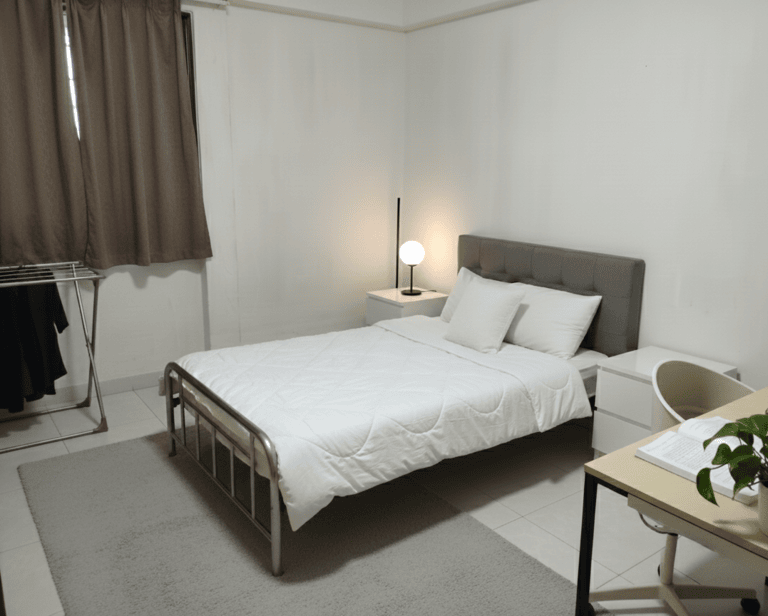
Furnished units have basic furniture and appliances provided, so moving in is easy but inspect condition and note what’s included. Unfurnished units come empty, meaning you must furnish the place yourself. It’s more work upfront, but you get to decorate it your way. Consider delivery logistics, lift bookings, storage needs, and whether you’ll keep or sell items at lease end.
Choose multi-functional furniture like a loft bed with desk underneath or storage ottomans. Use mirrors to create illusion of space and maximize natural light with light-colored curtains. Vertical storage solutions like wall-mounted shelves save floor space. Keep the room clutter-free and consider a small fan for better air circulation if the room feels stuffy.