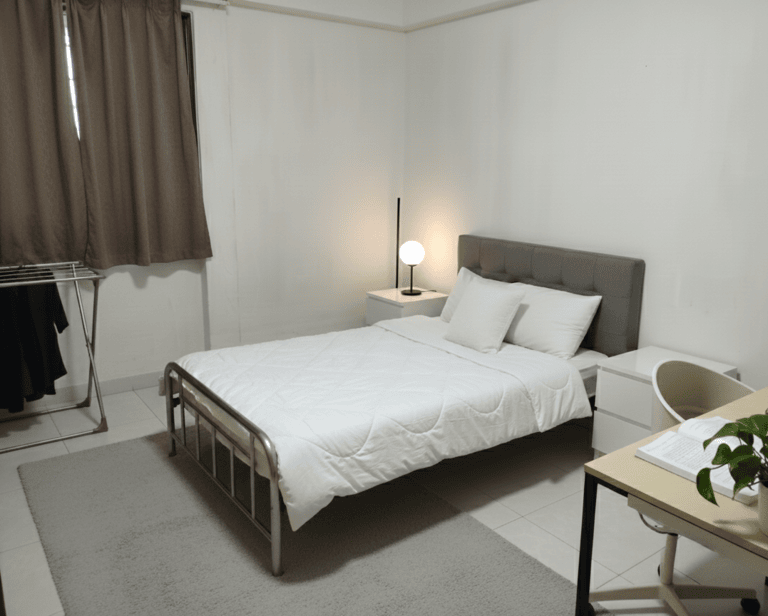
Create a dedicated workspace even if it's just a corner with a desk. Use visual cues like different lighting or a room divider to separate work time from personal time. Establish routines that help you mentally 'leave work' even when you can't physically leave the space.
Rental demand typically peaks during university intake periods (July-August and January) and expat relocation seasons (June-August and December-January). Prices may be higher during these periods. Consider timing your search during off-peak months for better deals and more negotiating power. Chinese New Year period often sees reduced activity.
Landed houses have different safety profiles with multiple entry points, windows at various levels, and potential outdoor access. Ensure proper locks on your room and understand emergency evacuation routes from upper floors. Consider personal security measures and understand neighborhood safety patterns, especially if your room has ground-level access.
Yes – generally one parking spot comes free with a condo unit. You’ll just need to register your car with the condo management to get a resident parking permit. Most condos allocate one free parking lot per unit, so you shouldn’t have to pay extra for parking.
Many 1-bedroom flats have a bathroom door off the living room. But some layouts only have an en-suite bathroom accessible through the bedroom, meaning guests must enter your bedroom. If you host often, look for a unit where the bathroom is accessible from the living area.
Teenagers require more privacy and independence than younger children. Consider bedroom assignments that provide adequate separation from parents and siblings, ensure good soundproofing for music and phone calls, and discuss household rules about friends visiting. Plan for increased utility usage and potential need for additional internet bandwidth or separate study spaces.
Renting a whole unit suits those who value privacy and space. It’s ideal for families, couples, or a group of friends who want the whole place to themselves. You can use and arrange the home as you wish, but you also shoulder full responsibility for rent, bills, and maintenance.
HDB flats typically offer more space and functional layouts for the price. You’ll likely appreciate everyday conveniences nearby. Focus on block condition, lift reliability, and airflow. If you value community feel and straightforward living, HDB can be a comfortable fit.