Yes. It should clearly state the monthly rent, the security deposit amount and conditions for return, what’s included in the rent (for example, are utilities or Wi-Fi covered?), the length of stay/notice period, and any specific house rules or restrictions. This protects both you and the landlord (or main tenant) by ensuring everyone knows the terms. Also, confirm that the landlord has approval to rent out the room (especially important in HDB flats, where there are rules on room rentals).
Students and young professionals often prefer HDB rooms for affordability and convenience. Expat families typically choose condos for amenities and international community. Established families might opt for landed houses for space and privacy. Consider your lifestyle priorities: budget-conscious renters suit HDB, amenity-seekers prefer condos, and space-needing families benefit from landed properties.
Factor in daily transport costs to work, not just rent. A cheaper rental far from MRT might cost more overall with daily taxi/grab rides. Consider monthly transport passes, peak hour surcharges, and travel time value. Properties near MRT stations command higher rent but offer convenience and cost savings. Calculate your total monthly housing + transport budget realistically.
Yes. Check that there’s an aircon in each bedroom and the living room. Make sure they all work. Also note the number of power outlets in each room. Some older flats have few sockets, so ensure there’s one where you plan to put your TV or computer. If not, you’ll need extension cords. Knowing this upfront helps you plan.
Check whether it’s in the kitchen or bathroom and listen for spin noise near the bed. Ensure there’s a drying area with airflow. If stacking is possible, measure carefully. Quiet operation matters when your sleeping and laundry zones overlap.
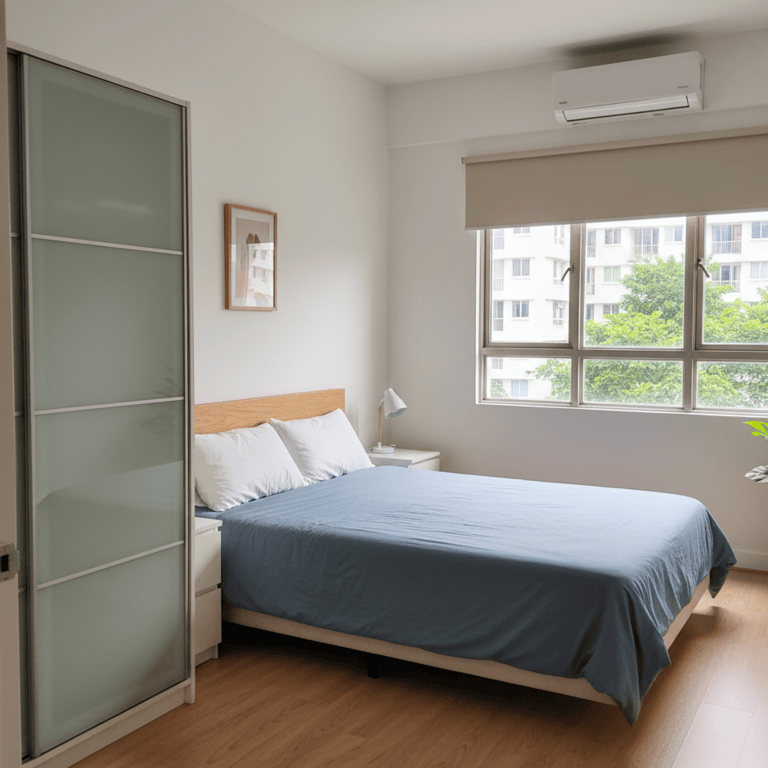
Choose multi-functional furniture like a loft bed with desk underneath or storage ottomans. Use mirrors to create illusion of space and maximize natural light with light-colored curtains. Vertical storage solutions like wall-mounted shelves save floor space. Keep the room clutter-free and consider a small fan for better air circulation if the room feels stuffy.
Research comparable listings to understand market rates before negotiating. Be prepared to make quick decisions as good properties move fast. Consider offering longer lease terms for rent discounts, or ask for inclusions like utilities or internet. Present yourself as a reliable tenant with references and proof of income. Avoid lowball offers that might offend landlords.
2-bedrooms can work for families with one or two young children, offering more space than a 1-bedroom while remaining affordable. Consider safety features, proximity to schools and parks, whether the layout allows parents to supervise children, and if there's adequate storage for family belongings and toys.