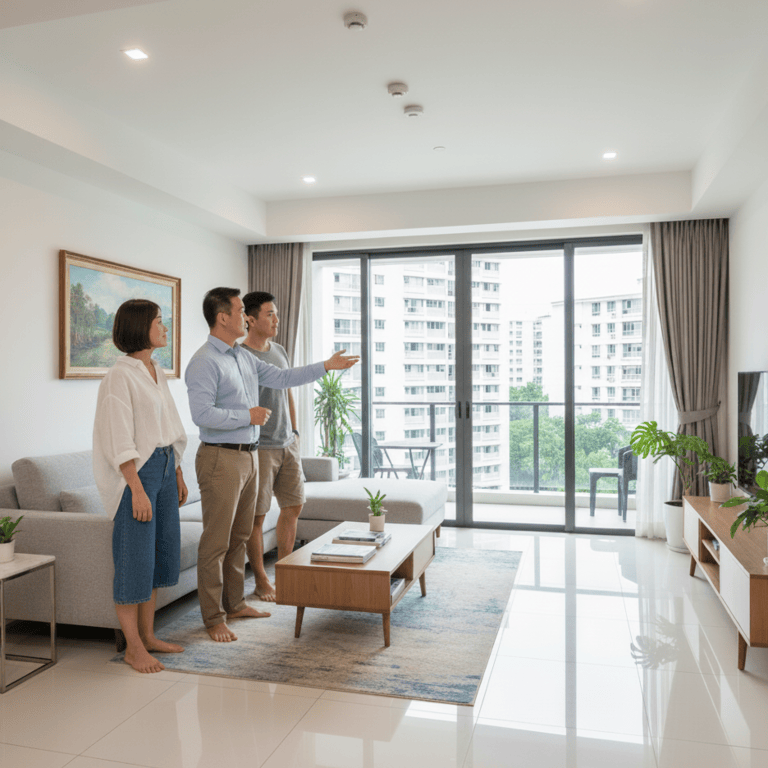
Yes, but requires planning. The separate bedroom allows one person to sleep while the other works or watches TV in the living area. Consider blackout curtains and sound management. Some couples prefer open-plan studios for togetherness, while others need the bedroom separation for different sleep schedules or work-from-home arrangements.
Look for persistent damp smells, water stains, mold, warped wood, peeling paint, pest traces, and poor ventilation. Test taps, appliances, windows, and locks. If something seems off or the landlord avoids answering questions, consider it a red flag.
HDB 2-bedroom units offer more space and value but fewer amenities. Condo 2-bedrooms cost more but include facilities like pools and gyms. Landed 2-bedroom units (rare) provide maximum privacy and space but highest costs. Consider your priorities: budget and space (HDB), amenities and lifestyle (condo), or privacy and outdoor space (landed).
Living alone means being prepared for emergencies like power outages, water leaks, or medical issues. Keep emergency contacts readily available, know your building's security and maintenance procedures, maintain a basic first aid kit, and establish check-in routines with family or friends. Know your neighbors and building management for urgent situations when you can't reach your landlord.
Ask about work schedules, sleep schedules, social habits, cleanliness, and how issues are handled. If one of you is very neat and the other more casual, it could cause friction. Observe fridge organization, sink state, and bathroom tidiness during viewing. Look for someone whose daily routine and approach to shared living align well with yours. Trust your instincts – feeling comfortable with their personality is a good sign.
Request to see the landlord's NRIC and property ownership documents or tenancy agreement if they're a main tenant. Check property records through official channels if needed. Be wary of landlords who refuse to meet in person, demand cash-only payments, or pressure for immediate decisions. Legitimate landlords will provide proper documentation and allow reasonable verification time.
Having a private attached bathroom is convenient – no sharing with others. You can use it anytime without waiting. However, you’ll be responsible for keeping it clean (there’s no one else using it). Check that the ensuite has good ventilation or a fan, since moisture can build up. Ensure the drainage slope, water pressure and hot water in the shower are good when you inspect. Overall, an ensuite adds comfort and privacy, but comes with the task of sole upkeep.
Aside from rent, you cover all ongoing costs. Budget for utilities (electricity, water, gas if any) and internet each month. If the unit has air-con, plan for regular servicing. You’re also responsible for minor maintenance like replacing light bulbs or filters. Basically, all household bills and upkeep fall to you.