Landed houses may require more frequent maintenance like roof repairs, plumbing work, or garden care that can disrupt daily routines. Understand notification procedures for maintenance work, temporary access restrictions, and how repairs might affect your room's utilities or accessibility. Plan accordingly for potentially longer disruption periods.
Common arrangements include parents' master bedroom, children's shared room, and a guest/study room. Some families give each child their own room, while others use one as a home office or playroom. Consider your family's current and future needs, including whether children will want separate rooms as they grow.
Landed houses offer more space but lack condo facilities. You’ll likely get a bigger room and maybe a garden or yard to enjoy. However, you won’t have amenities like a pool or gym on-site. It’s a balance: more personal space and privacy in exchange for not having shared facilities.
Most condos have strict renovation guidelines that tenants must follow. You typically cannot make structural changes, install permanent fixtures, or renovate during restricted hours. Even minor changes like painting or installing shelves may require management approval and deposits. Always check with building management and get landlord consent before making any modifications.
Use thick curtains or blinds, consider a white noise machine for sound privacy, and establish quiet hours with housemates. Create personal space within your room with furniture arrangement, and communicate your need for privacy respectfully. Good locks and personal storage help maintain security.
Check window seals and drainage before rainy season starts. Ensure you have adequate ventilation to prevent mold in humid conditions. Stock up on dehumidifiers or moisture absorbers. Know how to operate all fans and air-con units efficiently. Test that umbrellas and rain gear are accessible, and understand evacuation procedures if your area is flood-prone.
1-bedroom units offer better entertaining space than studios with separate living areas. However, overnight guests may need to use a sofa bed in the living room. Consider the bathroom situation - ensure guests don't need to go through your bedroom to access facilities. The kitchen size may limit your ability to cook for larger groups.
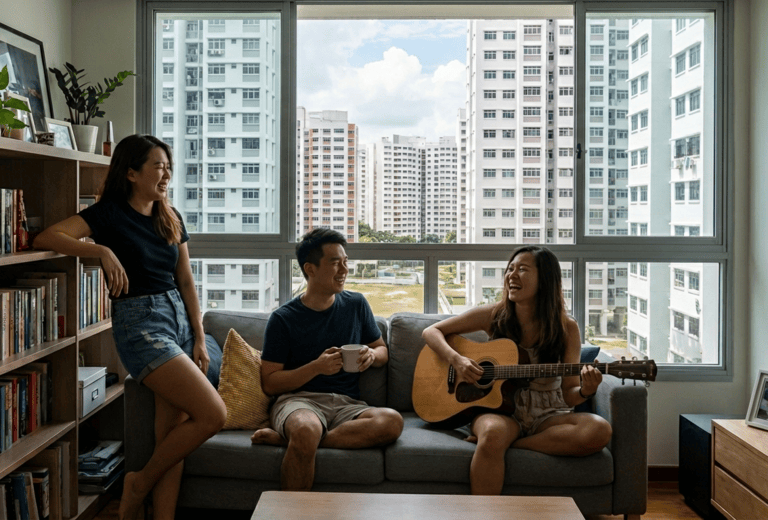
Singapore's diverse rental market means you'll likely live with people from different cultures. Be open-minded about different cooking styles, religious practices, and lifestyle habits. Establish ground rules early about shared spaces, food storage, and cultural celebrations. Respect dietary restrictions and prayer times. This diversity can be enriching if approached with understanding and clear communication.