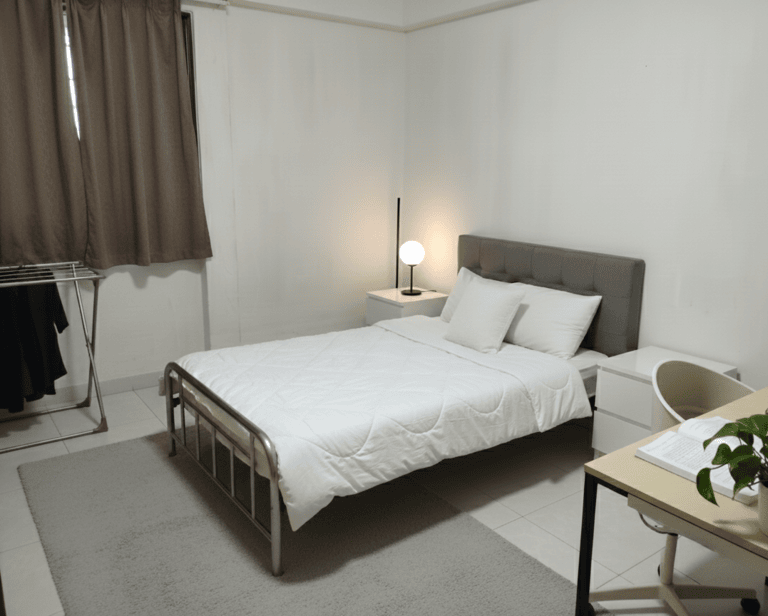
Teenagers require more privacy and independence than younger children. Consider bedroom assignments that provide adequate separation from parents and siblings, ensure good soundproofing for music and phone calls, and discuss household rules about friends visiting. Plan for increased utility usage and potential need for additional internet bandwidth or separate study spaces.
Use the additional space for a work area, reading nook, or exercise space. Consider whether you need all the space for bedroom functions or can create multiple zones. The extra room allows for larger furniture pieces, more storage, or simply a less cramped living environment.
Landed homes lack the security of condos, so you need to be mindful. Always lock doors, windows, and the gate. If you’re on the ground floor, ensure your window has a grille or strong lock. Some houses have alarms or cameras, but day-to-day safety relies on you being vigilant.
Prepare a list of questions about utilities, maintenance, lease terms, and neighborhood amenities. Bring a measuring tape for furniture planning and take photos/videos for later comparison. Check water pressure, electrical outlets, mobile reception, and natural light. View properties at different times if possible to assess noise levels and traffic patterns.
You’ll likely enjoy space, privacy, and potential outdoor areas. You won’t share walls or floors with neighbors, so noise is less of an issue. It suits families, pet owners, or hobbies needing storage. In return, expect more maintenance involvement. Clarify responsibilities for gardens, drains, and exterior checks before signing the agreement.
Confirm whether you’ll park on a driveway or street and how visitors should park. Test gate mechanisms and night lighting. If you own bicycles or scooters, ensure secure storage and a practical route without lifting heavy equipment up stairs.
Landlords typically have property insurance, but this doesn't cover your personal belongings. Consider renter's insurance for your possessions and personal liability. Some policies cover temporary accommodation if the unit becomes uninhabitable. Check if your landlord requires you to have insurance and understand what's covered under their policy versus what you need to protect yourself.
Families need significant storage for clothing, toys, school supplies, and household items. Look for built-in wardrobes in each bedroom, linen closets, kitchen storage, and utility areas. Check if there's a storeroom, under-stair storage, or if you can add storage furniture without overcrowding the space.