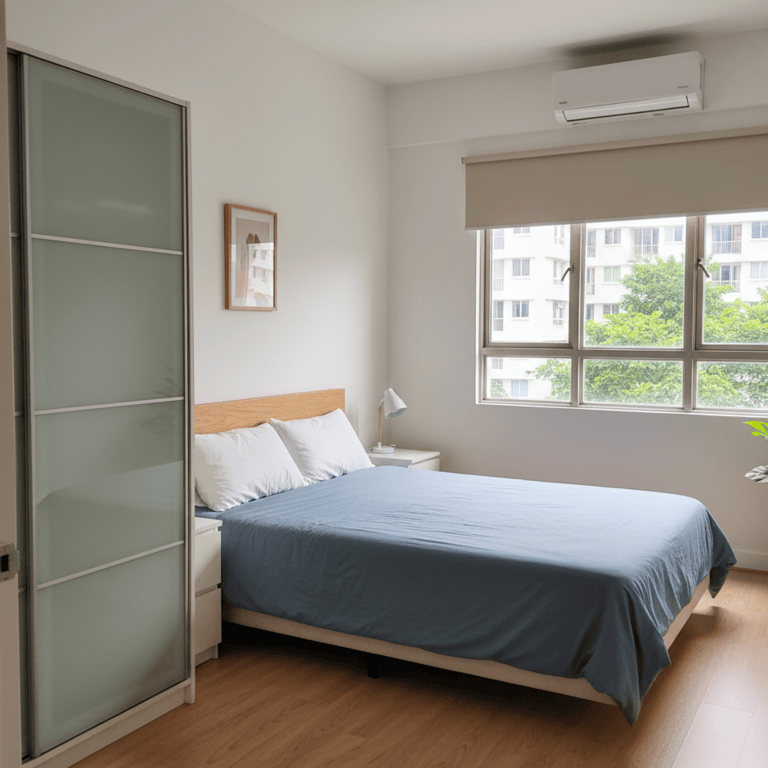
For two roommates, equal-sized bedrooms (and ideally two bathrooms) are preferable. For a small family, a larger master and a smaller second bedroom (for a child or study) works fine. So it depends: roommates usually want a balanced layout, while families can manage with one bigger and one smaller room.
Yes, definitely. With four bedrooms, you probably have a spare room that can become an office or hobby space. It’s common to turn the extra room into a study, art studio, home gym, etc. You don’t have to use all bedrooms for sleeping. Furnish that room for its purpose (desk, shelves, workout gear, etc.). If needs change, you can turn it back into a bedroom, but it’s great to have that flexibility.
You can use a spare bedroom in many ways. It could be your home office or study, a guest room for visitors, or even a hobby room. Some people turn the extra room into a walk-in closet or extra storage. Essentially, it's bonus space you can adapt to your needs.
Yes, even a tiny balcony is useful. You can sit outside for fresh air—place a small chair and table to create a cozy outdoor corner. Some tenants use balconies to dry laundry (if allowed) or grow a few potted plants. It's like having a little extra outdoor space for relaxation.
Condo management fees (maintenance fees) are typically included in your rent, but some landlords may pass increases to tenants. These fees cover facility maintenance, security, and common area upkeep. Ask if rent includes all management fees or if there are additional charges for facility usage. Higher-end condos with more amenities generally have higher management fees reflected in rental prices.
Calculate total monthly costs including rent, utilities, maintenance fees, and transport costs, then divide by usable square footage. Factor in efficiency of space usage - a well-designed 1-bedroom may offer better value than a poorly laid out larger unit. Consider included amenities, storage space, and whether the layout maximizes livable area versus wasted corridor or awkward spaces.
Renovations are common in HDB estates, so occasional daytime drilling or hacking noise is normal. Work is only allowed during set hours, but it can still be disruptive if a nearby unit is being redone. Know that it’s temporary and typically accompanied by advance notice to residents.
Create a dedicated workspace even if it's just a corner with a desk. Use visual cues like different lighting or a room divider to separate work time from personal time. Establish routines that help you mentally 'leave work' even when you can't physically leave the space.