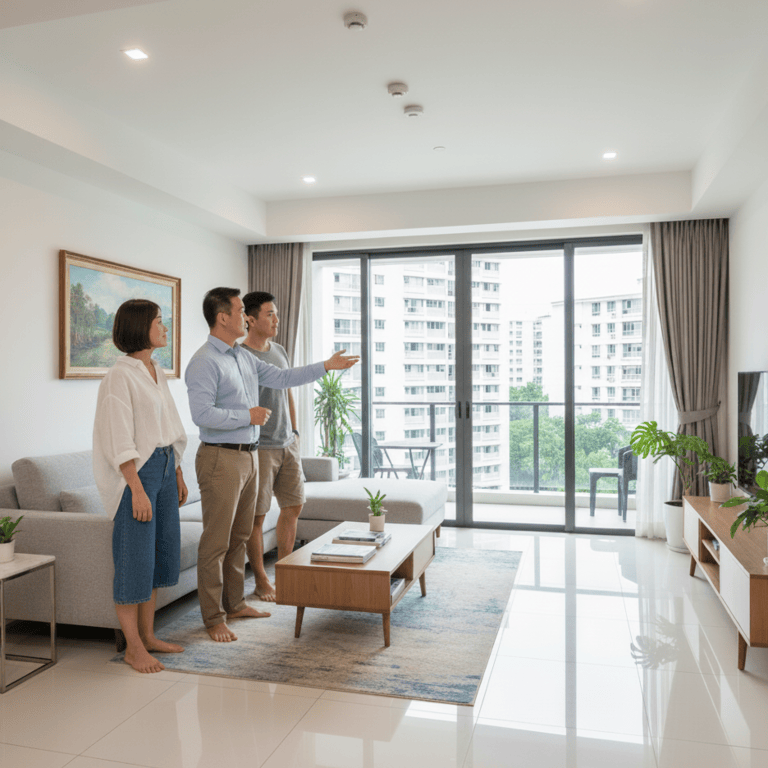
For unit-specific issues, contact your landlord first. For common area problems or facility issues, you can report directly to condo management. Some condos have apps or online portals for maintenance requests. Understand the difference between landlord responsibilities (your unit) and management responsibilities (common areas) to report issues to the right party efficiently.
HDB units offer excellent value for families with practical layouts and nearby amenities like schools, clinics, and childcare. The strong community environment provides social support networks. Playgrounds and void decks offer safe spaces for children. However, consider space constraints in newer flats and noise from neighbors due to closer proximity than landed houses.
Establish clear common area rules and assign personal storage spaces in each bedroom. Use the third bedroom strategically - as a study, guest room, or helper's quarters. Create a household schedule for shared spaces like bathrooms and kitchen. Consider installing additional hooks and organizers in common areas to prevent clutter.
Check for window safety features, electrical outlet covers, sharp corners on built-in furniture, and secure balcony railings. Look for adequate lighting, non-slip flooring in bathrooms, and whether the layout allows parents to supervise children easily. Consider proximity to playgrounds and family amenities.
Families need significant storage for clothing, toys, school supplies, and household items. Look for built-in wardrobes in each bedroom, linen closets, kitchen storage, and utility areas. Check if there's a storeroom, under-stair storage, or if you can add storage furniture without overcrowding the space.
Aim to return the home in similar condition, focusing on kitchens, bathrooms, and flooring. Degrease hoods, wipe seals, and clear drains. Replace spent bulbs and wash removable filters. Provide dated photos after cleaning to support a smooth deposit outcome.
Agree on clear house rules with your flatmates early. Clarify quiet hours, overnight guests, cooking frequency, kitchen use, fridge space, and laundry timing. Discuss cleaning expectations for kitchen and bathrooms. Check rules about smoking or pets. Setting these expectations from the start helps prevent conflicts and keeps everyone comfortable.
Research the area's safety record, future development plans, and property value trends. Check proximity to essential services like hospitals, schools, and shopping centers. Evaluate public transport connectivity and traffic patterns during peak hours. Consider the community demographics and whether the neighborhood aligns with your lifestyle preferences and long-term plans.