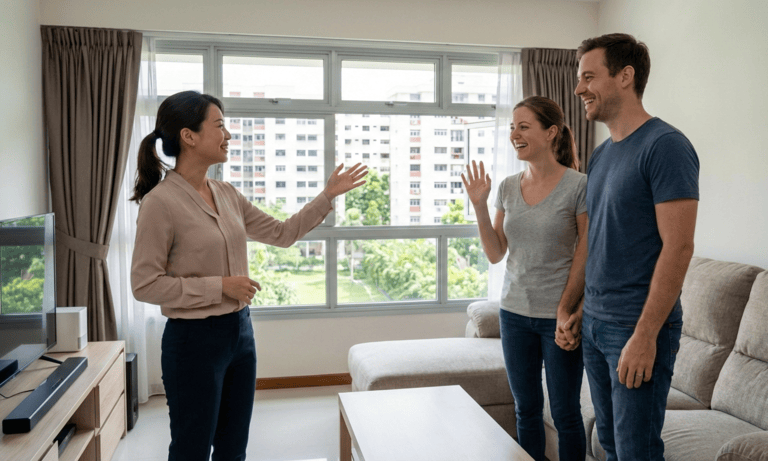
Look for layouts where bedrooms don't directly face each other for better privacy. Check if both bedrooms have windows for natural light and ventilation. Consider whether the kitchen is open or closed to the living area - open kitchens feel spacious but cooking smells spread. Ensure there's adequate storage throughout the unit, not just in bedrooms.
At move-in, note any existing damage (take photos) and inform the landlord immediately so you’re not held liable. At move-out, return the home in the same condition: clean thoroughly, fix any minor damage you caused, and ensure all items are returned. This way you should get your deposit back.
Yes, tenants can usually use condo facilities like the pool, gym, function rooms, or BBQ pits. Ensure the landlord gives you a resident access card. Some amenities require advance booking or small fees (e.g., BBQ pits or tennis courts), so check the condo’s booking procedures and rules.
HDB flats open onto a common corridor. If your unit is along a corridor with neighbors walking by, you might need to keep your gates or curtains closed at times for privacy. Corner or end units offer a bit more seclusion since fewer people pass your door. When viewing a flat, notice the corridor layout – if the windows or door face a busy walkway, plan on using curtains/blinds for privacy. It’s a different feel from a private condo, but most residents get used to it.
Corner units typically offer better ventilation, more natural light, additional windows, and sometimes larger layouts. They may also have less shared walls with neighbors, providing more privacy. However, they might be more expensive and could be noisier if facing main roads or having more external exposure.
A lot of 1-bedroom units have small bedrooms. A queen-size bed usually fits, but a king-size might be a tight squeeze. With a king, you might have little room left for bedside tables or a dresser. Always check the room dimensions beforehand to ensure you can still move around comfortably.
Landed houses may require more frequent maintenance like roof repairs, plumbing work, or garden care that can disrupt daily routines. Understand notification procedures for maintenance work, temporary access restrictions, and how repairs might affect your room's utilities or accessibility. Plan accordingly for potentially longer disruption periods.
Open kitchens feel social and spacious but spread cooking smells. Closed kitchens contain noise and grease better. Think about your cooking style, ventilation, and how often you host. The right choice depends on whether you prioritize openness or cleanup ease.