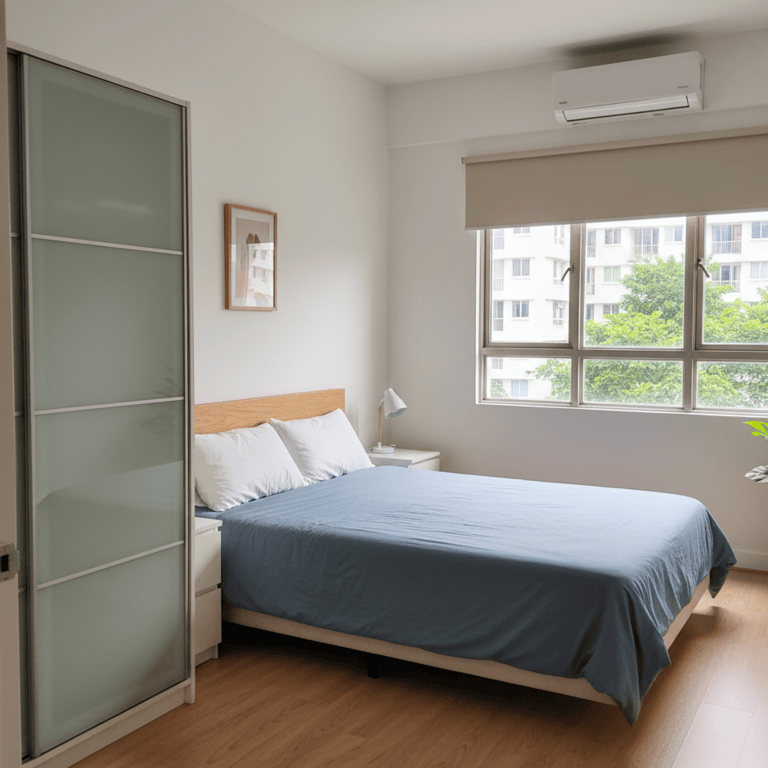
If you rent a common room, you’ll likely share a bathroom with one or more housemates. Agree on morning and evening peak times, cleaning duties, and storage space for toiletries. A shower caddy and labeled shelves reduce friction. Expect to compromise a little on timing and cleanliness habits, but overall, as long as everyone is considerate (cleaning hair from the drain, not hogging the bathroom for an hour), sharing a bathroom is manageable.
Use the second bedroom as a study (or an office/guest room combo). If both bedrooms are in use, find a nook in the living or dining area for a desk. For instance, a small desk by a window can serve as a cozy work spot. Pick a corner that doesn't disrupt daily living.
Older HDB flats are usually more spacious but come with age. They might have older fittings and be a bit more worn, and some can get warm if they lack modern ventilation or insulation. Newer flats have updated interiors and designs, but they often trade off some space – rooms and living areas might be smaller. Think about whether you prefer the extra room of an older flat (and don’t mind a bit of old-school charm) or the fresh finish of a newer, albeit cozier, flat.
Teenagers require more privacy and independence than younger children. Consider bedroom assignments that provide adequate separation from parents and siblings, ensure good soundproofing for music and phone calls, and discuss household rules about friends visiting. Plan for increased utility usage and potential need for additional internet bandwidth or separate study spaces.
At move-in, note any existing damage (take photos) and inform the landlord immediately so you’re not held liable. At move-out, return the home in the same condition: clean thoroughly, fix any minor damage you caused, and ensure all items are returned. This way you should get your deposit back.
With more people and activities, noise management becomes important for family harmony and neighbor relations. Check sound insulation between rooms, whether bedrooms are clustered together, and if living areas are separated from sleeping areas. Consider carpet or rugs for sound dampening.
Go furnished for convenience and lower upfront setup, but inspect furniture condition and note wear expectations. Choose unfurnished for flexibility and hygiene control, factoring in delivery time, storage needs, and the effort to move items at lease end. It really depends on whether you have furniture and want to customize the space or prefer a move-in-ready setup.
1-bedroom units offer better work-life separation than studios with a dedicated bedroom for sleep and living area for work. You can have video calls without showing your bed, and maintain professional backgrounds. However, the limited space means you'll need efficient furniture and good organization. Consider noise levels from neighbors and ensure good internet connectivity for reliable remote work.