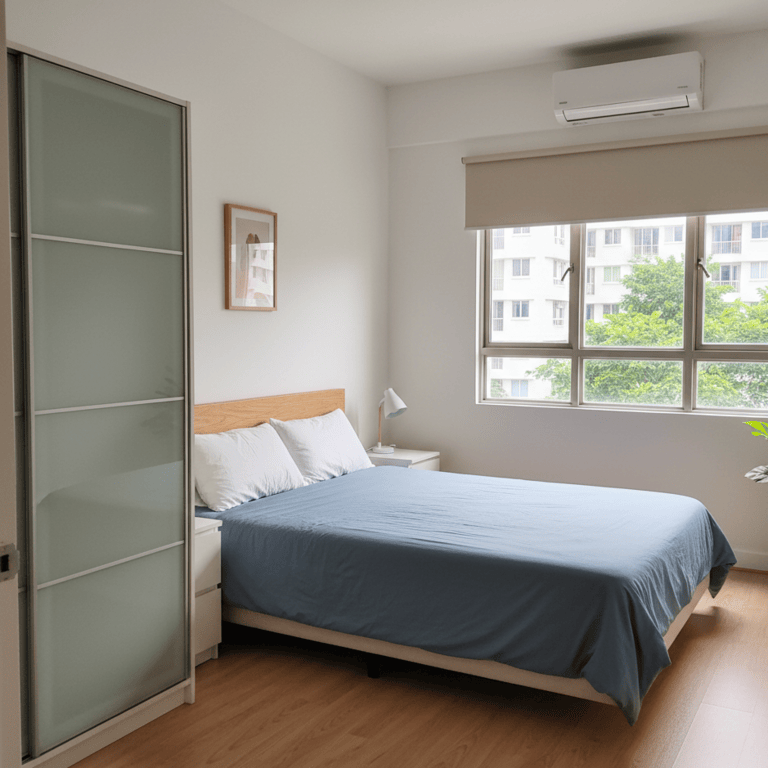
Use room dividers, curtains, or tall furniture to create visual separation between sleeping, working, and living areas. Strategic lighting can create intimate spaces within the open plan. Consider a murphy bed or loft bed to maximize floor space during the day. Establish routines that give you psychological separation between work and rest time.
Coordinate with your roommate about quiet hours, morning routines, and shared space usage during different schedules. Consider soundproofing measures like rugs, curtains, or white noise machines. Discuss kitchen and bathroom usage during early morning or late night hours. Establish guidelines for guests and entertainment when one person is sleeping.
More space means more maintenance responsibilities. Budget extra time and money for cleaning, air-con servicing for multiple units, and potential repairs across more rooms. Consider hiring help for regular cleaning or establish clear maintenance schedules if sharing. More space also means higher wear and tear on common areas.
Landlords typically have property insurance, but this doesn't cover your personal belongings. Consider renter's insurance for your possessions and personal liability. Some policies cover temporary accommodation if the unit becomes uninhabitable. Check if your landlord requires you to have insurance and understand what's covered under their policy versus what you need to protect yourself.
Most condos have strict renovation guidelines that tenants must follow. You typically cannot make structural changes, install permanent fixtures, or renovate during restricted hours. Even minor changes like painting or installing shelves may require management approval and deposits. Always check with building management and get landlord consent before making any modifications.
You get an extra room to use flexibly. For example, parents in one room, kids in another, and the third bedroom becomes a study, home office, or helper’s room. Basically, the third room means you don’t have to sacrifice having an office or guest space—you can have both.
Clarify with your housemates or landlord how utilities are divided. Often, all occupants split electricity, water, and internet bills equally. In some cases, if one person uses significantly more (e.g., air-con all day), they might pay a bit more. It’s important to agree on a fair arrangement upfront so everyone knows their share of the monthly bills. Keep bills visible to everyone and record transfers for transparency.
2-bedroom units typically cost 60-80% more than 1-bedroom units, but when shared between two people, can be more economical per person than individual studios. Factor in additional costs like higher utility bills with more space to cool and light. Consider whether the extra space and privacy justify the higher cost for your lifestyle and budget.